


Project Manager
18 months
Jira, Notion, Slack, Figma, Loom
AI-Powered SaaS
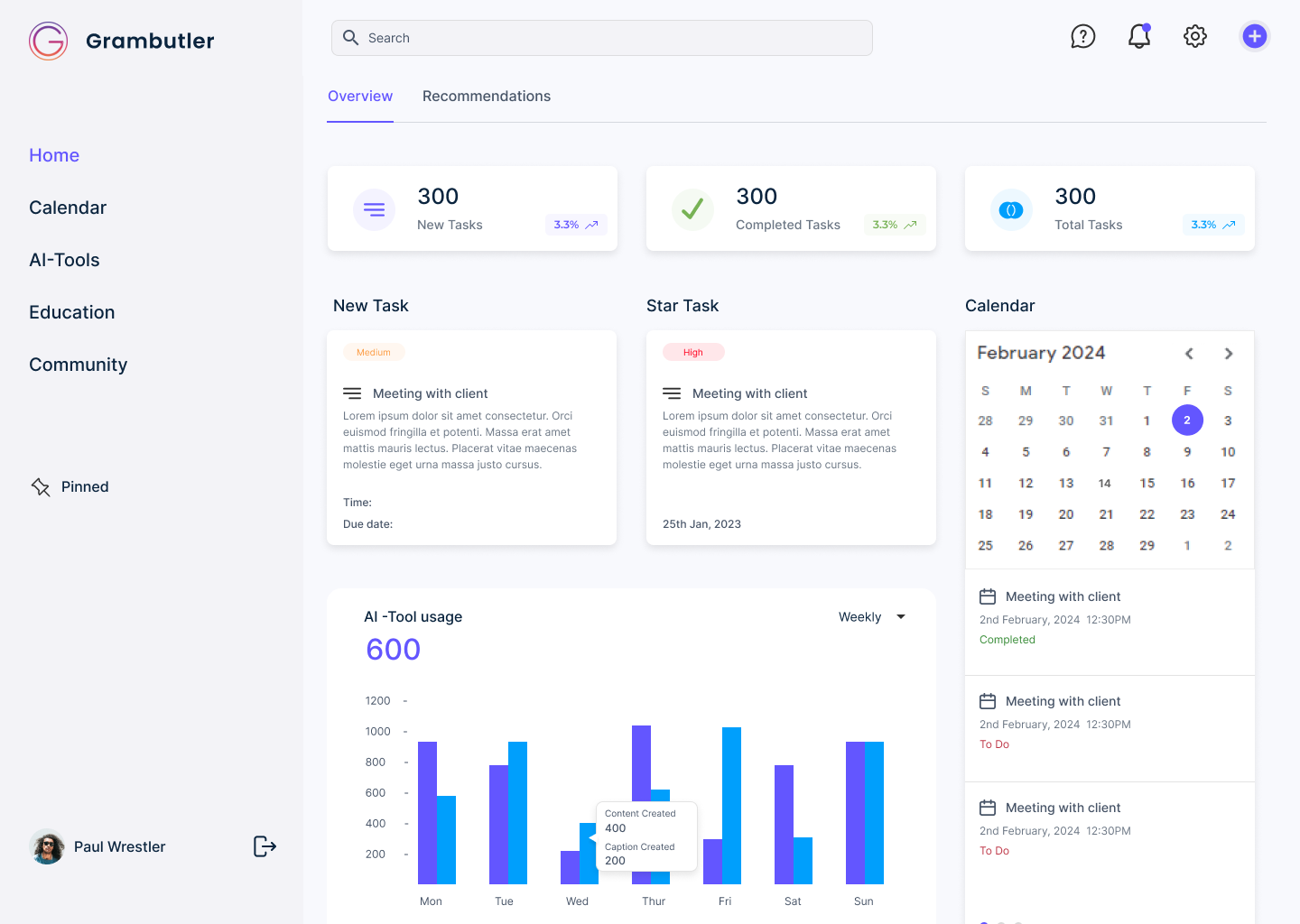
Grambutler was a multi-layered SaaS build combining six social platform integrations, an AI-powered analytics engine, and a three-tier subscription system into one interconnected platform.
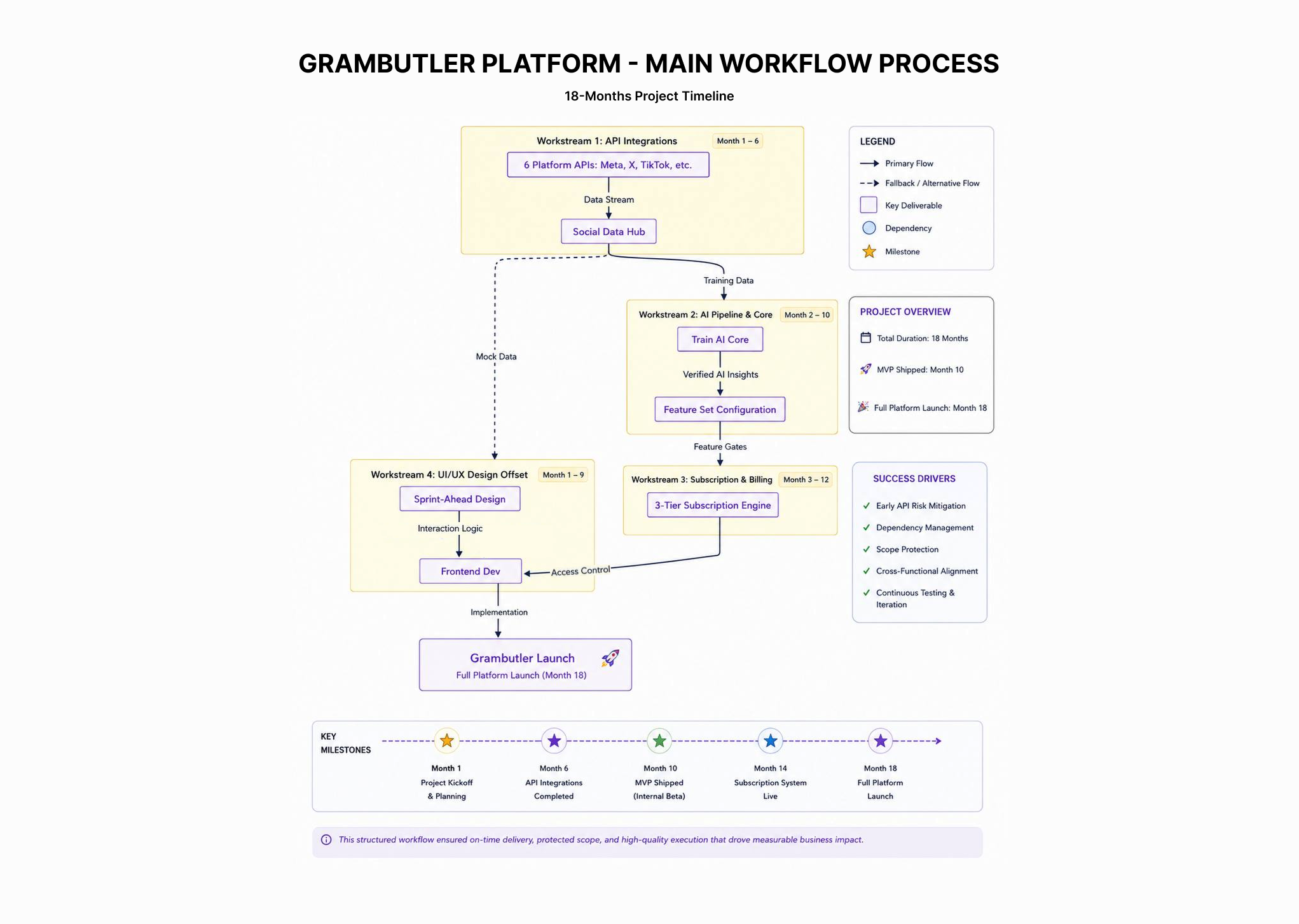
The complexity was not just technical. Every workstream depended on another at different stages of the build lifecycle:
With distributed teams across AI/ML engineering, frontend and backend development, design, QA, and stakeholders, the primary challenge became coordinating dependencies, protecting the timeline, and preventing operational bottlenecks across an 18-month delivery cycle.
Before development began, I led a two-week discovery phase focused on identifying delivery dependencies, execution risks, and potential blockers across all workstreams.
The six external API approvals were immediately identified as the project’s highest delivery risk, so all applications were escalated during the first week of the project. This allowed foundational platform development to continue while approvals ran in parallel instead of delaying implementation later in the timeline.
To reduce implementation rework, I structured the design workflow one sprint ahead of frontend development throughout the project lifecycle.
Weekly reviews between the UI/UX designer, frontend lead, and AI lead ensured alignment between interaction logic, AI data presentation, and engineering requirements before interfaces entered active development.
The project was divided into four dedicated workstreams covering integrations, AI infrastructure, subscription architecture, and frontend experience.
Rather than focusing on individual tickets, my role centered on coordinating execution boundaries between teams, managing dependencies, and maintaining sprint alignment across workstreams.
Bi-weekly cross-functional syncs focused exclusively on blockers, dependency resolution, and delivery decisions rather than routine status reporting.
During month three, stakeholders requested additional MVP features including podcast analytics and Threads integration.
After assessing the delivery impact, I proposed moving both features into the post-launch roadmap rather than extending the launch timeline. The revised roadmap preserved delivery stability while maintaining alignment on long-term product goals.
This became one of the most important scope-management decisions in the project.
Midway through development, the integration team discovered stricter API rate limits than publicly documented across multiple platforms.
Rather than waiting for escalation cycles, I coordinated a focused architecture review between backend and integration leads to redesign the synchronization pipeline using intelligent queuing and caching before launch.
The rework was completed within eight days and prevented significant scalability issues under real user load.
To reduce meeting fatigue across distributed teams, I replaced daily all-hands standups with short asynchronous Loom updates from team leads.
This allowed live collaboration sessions to focus entirely on decision-making, dependency resolution, and delivery coordination rather than status reporting.
Stakeholder design reviews were consolidated into scheduled weekly review cycles to prevent disruptive mid-sprint changes and improve frontend delivery consistency.
This created a more stable implementation environment and improved sprint predictability across the development team.
Before subscription development began, I created a one-page operational SOP defining:
This became a shared implementation reference across frontend, backend, and AI teams and helped prevent conflicting interpretations during development.
Grambutler’s MVP shipped at month 10, The full platform launched at month 18 on the agreed timeline and within budget.
The project scaled into a high-retention SaaS platform through structured dependency management, scope control, and early API risk mitigation.
Businesses Served
social interactions processed daily,
Retention Rate
Engagement Growth
Whether it is a product build, an internal initiative, or a project that has already started and needs rescuing, tell me what is happening. I will tell you honestly how I would approach it.