


Operations Architect
5 Days
n8n, Apify, Airtable, Lovable
Lead Generation Automation
The client relied on a fully manual lead-generation process. Potential customers were sourced through Google Maps, copied into spreadsheets by hand, and prepared for outreach with little consistency or structure.
The challenge was not only the time required to build lead lists. Manual collection often resulted in incomplete records because email discovery was performed separately and was frequently skipped. As a result, outreach lists lacked the verified contact information needed to support effective prospecting.
The objective was to replace the manual workflow with a scalable system capable of sourcing, enriching, organizing, and managing leads through a single interface.
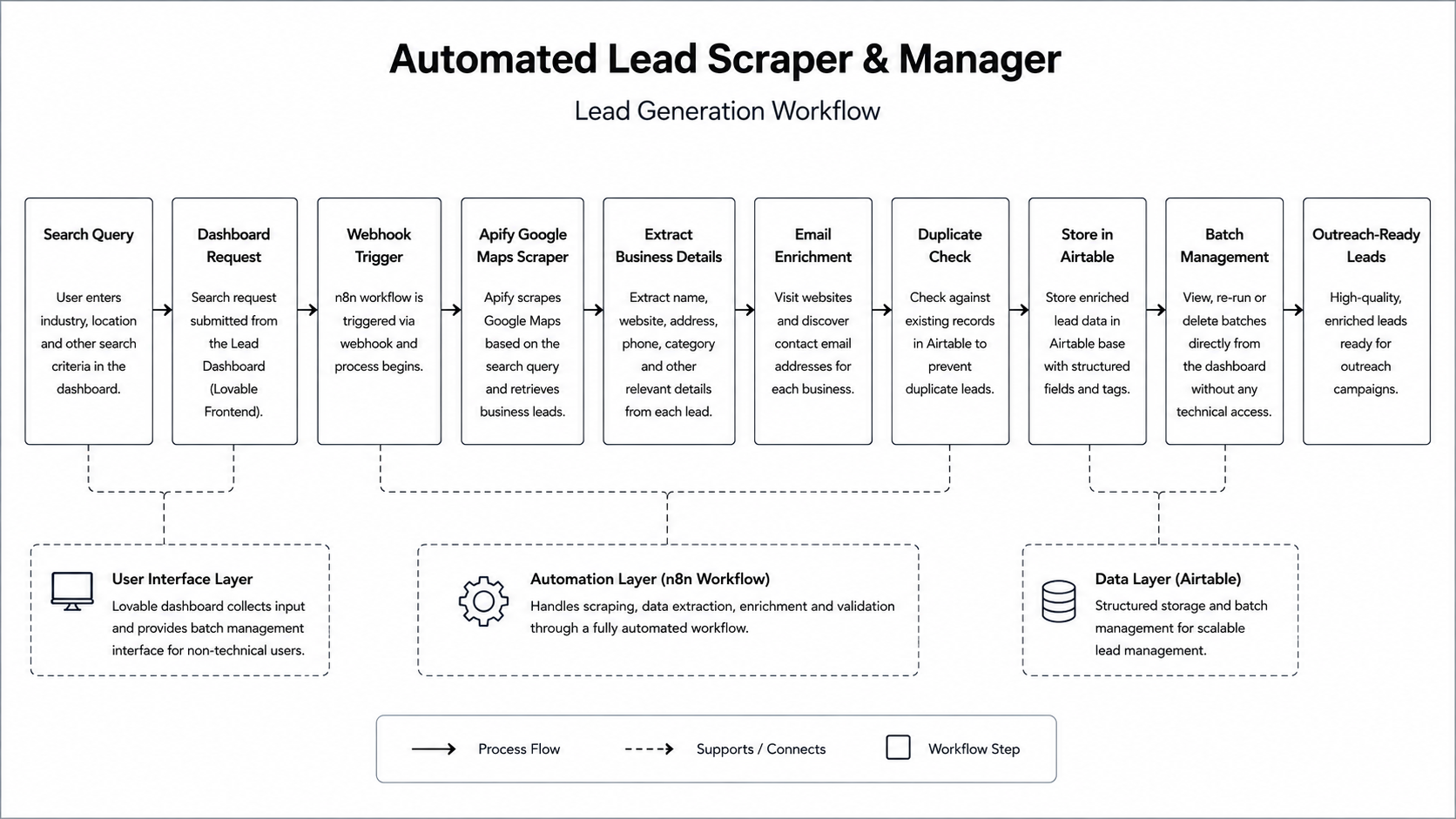
Before building the solution, I documented the existing process end-to-end. This included identifying manual activities, bottlenecks, failure points, and opportunities for automation. The audit produced the workflow blueprint that guided the architecture and implementation.
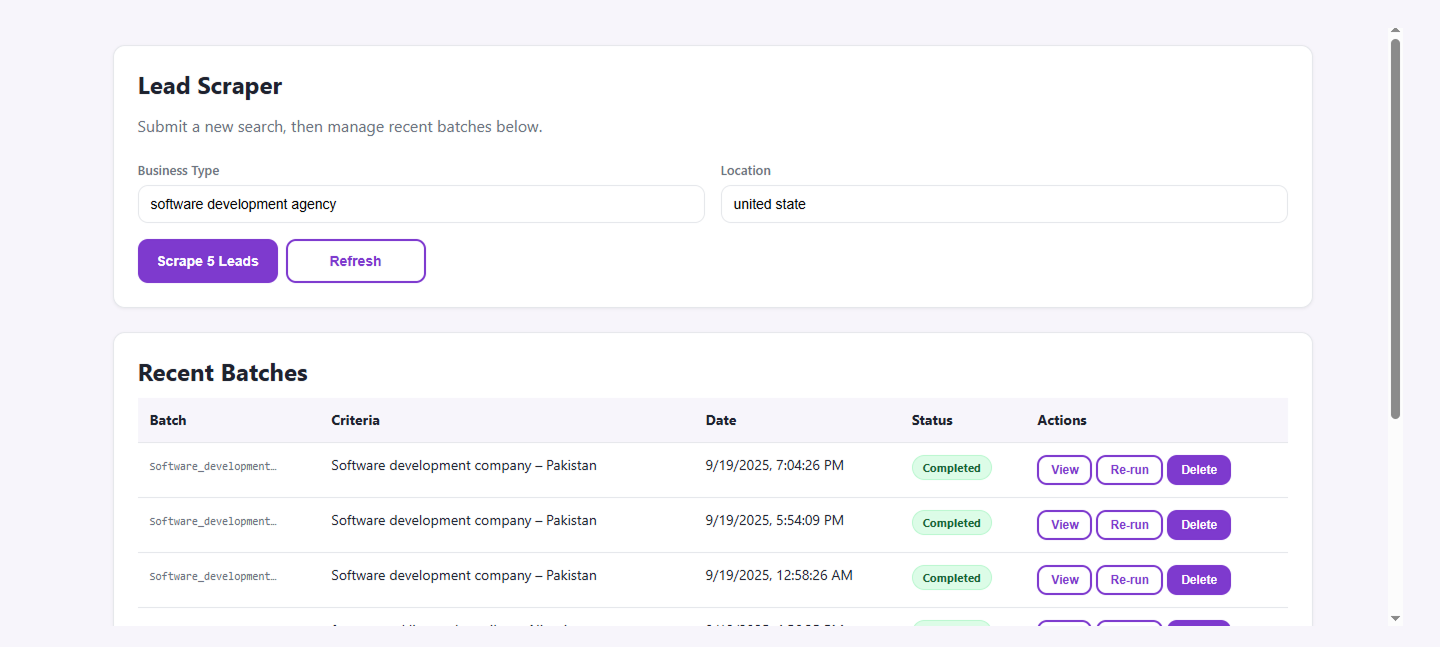
I designed and built a custom lead management dashboard using Lovable to provide a simple interface for non-technical users. Building the dashboard first established the workflow inputs, user interactions, and webhook contract before automation development began.
This approach reduced implementation risk and prevented frontend-to-backend integration issues later in the project.
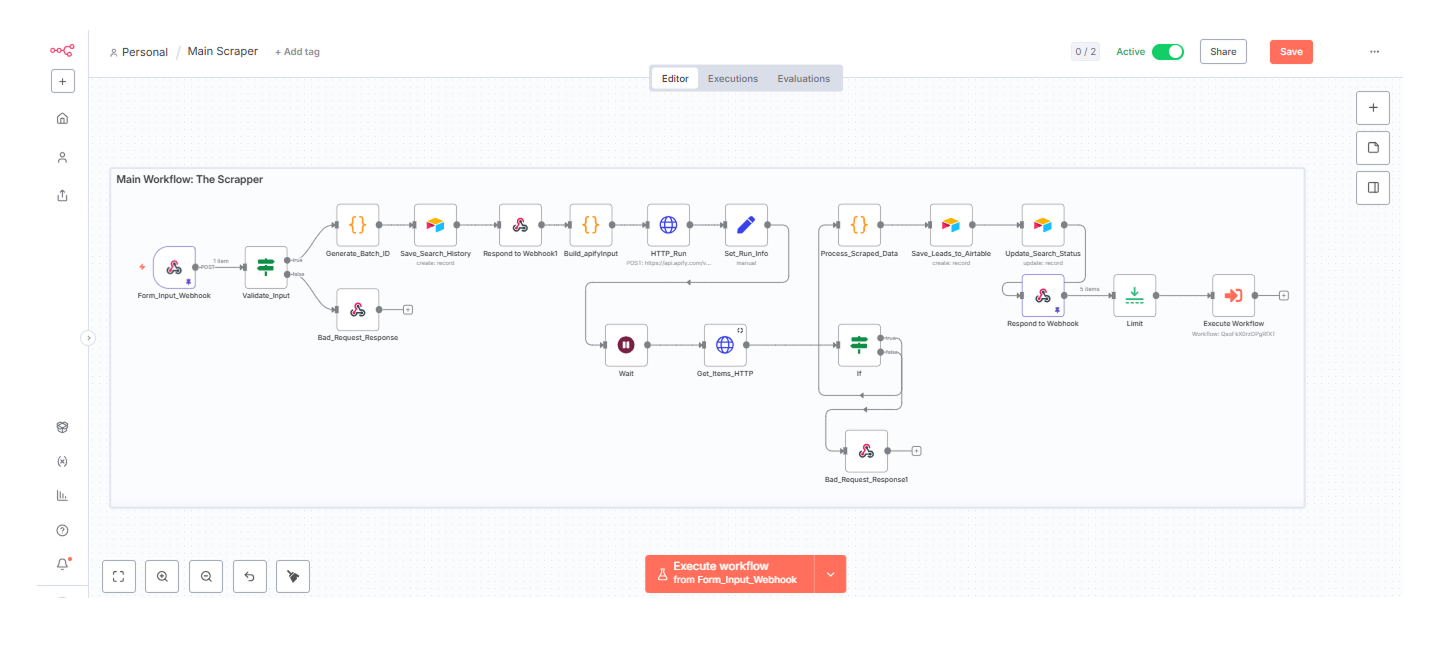
The automation workflow was triggered through a webhook and passed search parameters to Apify for Google Maps lead extraction. Business information was then processed through an enrichment stage that searched company websites for contact email addresses.
The workflow was intentionally modular, allowing individual stages to be upgraded or replaced without impacting the overall system.
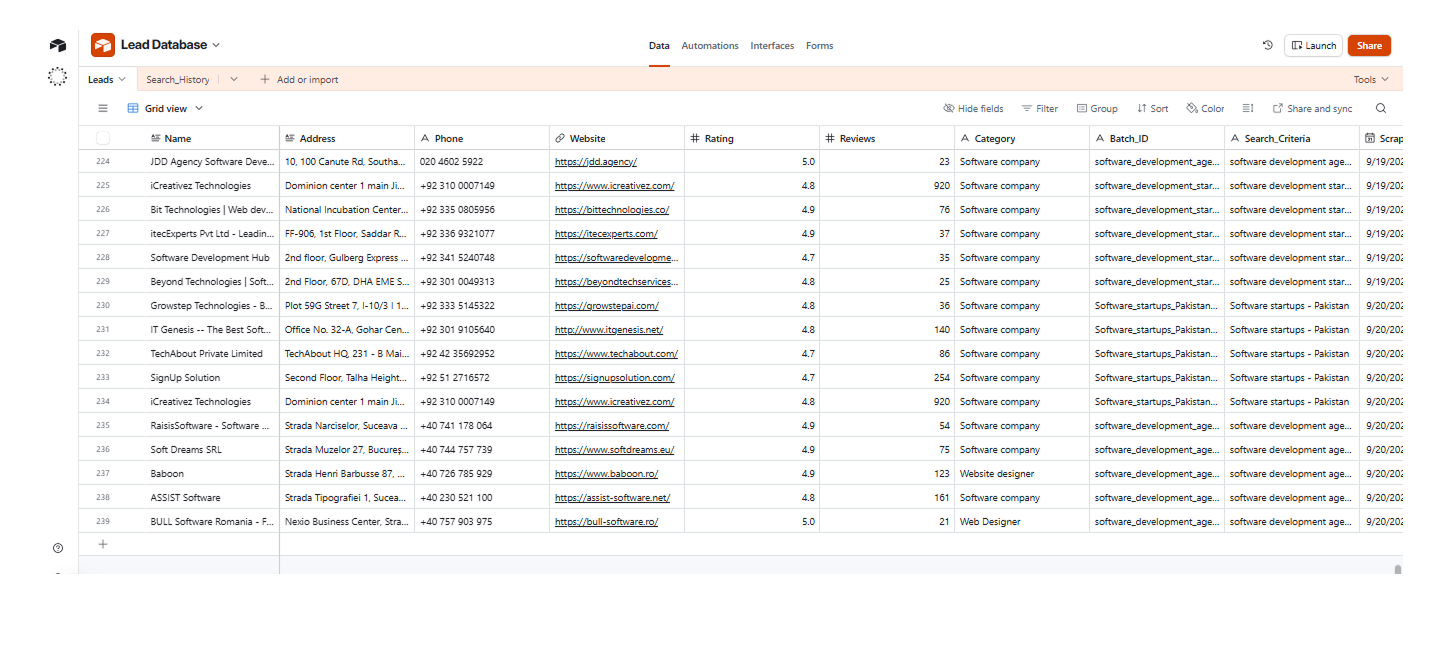
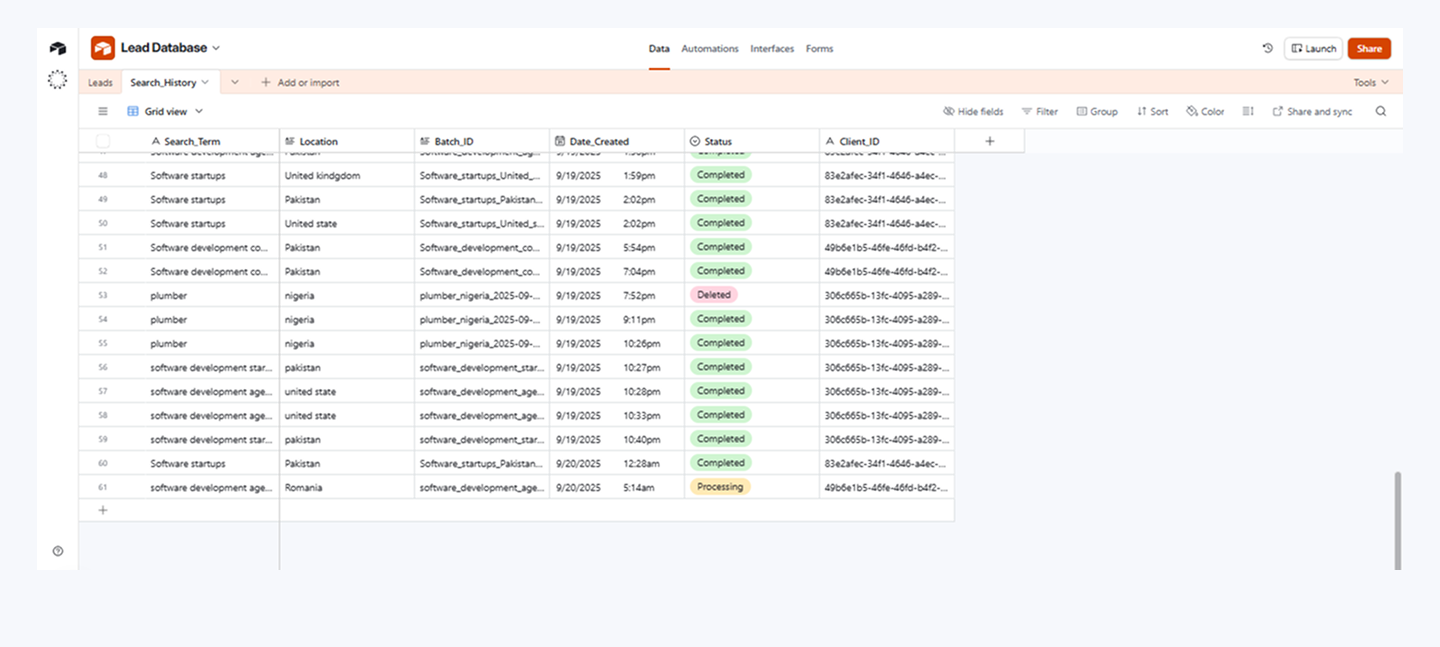
Enriched leads were stored in Airtable using a structured schema designed for long-term scalability. Batch management functionality allowed users to rerun searches, manage records, and remove entire lead batches directly from the dashboard without requiring technical assistance.
Duplicate prevention logic was incorporated from the start to maintain data quality as lead volume increased.
A common approach in lead scraping projects is to maximize volume as quickly as possible. I deliberately chose a different path.
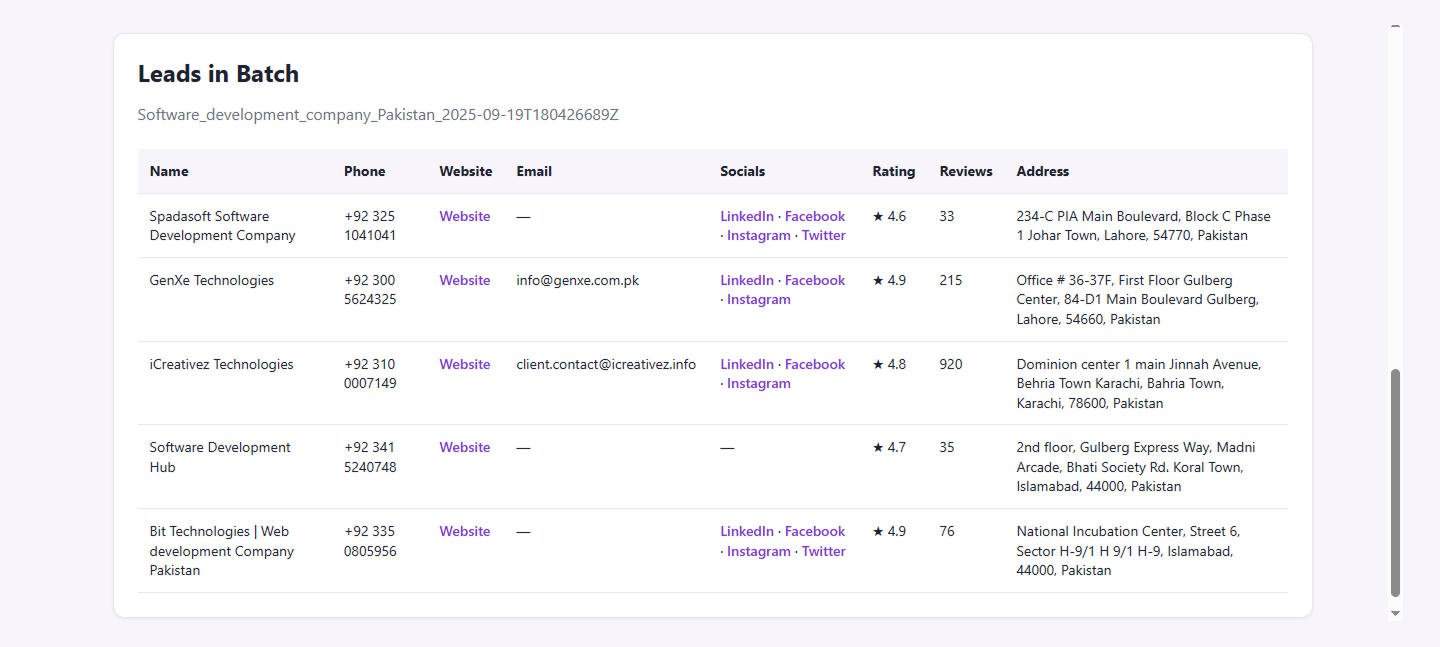
Each workflow execution was limited to five leads to ensure sufficient processing time for enrichment and validation. This produced smaller but significantly more valuable lead lists with verified contact information.
The architecture remained scalable, allowing volume increases in future iterations without redesigning the enrichment workflow.
Most automation projects begin with backend workflow development. I intentionally reversed that sequence.
By defining the dashboard first, I established the exact data structure the workflow needed to accept. This prevented integration issues, reduced rework, and ensured the automation was designed around the user experience rather than forcing the user to adapt to the automation.
The solution transformed a process that previously required hours of manual effort into a workflow that completed in under two minutes per batch.
Automated email enrichment improved lead quality by ensuring every record passed through the same validation process rather than relying on inconsistent manual research.
The dashboard enabled non-technical users to operate the system independently, eliminating the need for ongoing support and reducing operational dependency on technical staff.
Most importantly, the business gained a scalable lead-generation capability without increasing headcount. The architecture was designed to support larger batch sizes, additional enrichment providers, and future data sources as growth demands increased.
Generation Speed (Down from Hours)
Manual Steps Eliminated
Automated & Enriched
Enriched Leads Per Execution
That is exactly where I do my best work. Tell me what is frustrating you operationally, even if you cannot name it precisely yet. I will ask the right questions and tell you what I would fix first.